Showing posts with label Vector Graphic. Show all posts

Double the Firepower: A Complete Guide to Mastering Free Vectors Akimbo in Free Fire

Since its introduction to the battlefield, the Vector submachine gun has completely changed the meta of Garena Free Fire. Known for its blistering fire rate and devastating close-range capabilities, the Vector becomes a true nightmare for opponents when used in "Akimbo" mode. In this guide, we will show you exactly how to double your firepower and dominate your matches.

Understanding the Akimbo Mechanic

The Akimbo mode allows players to hold one weapon in each hand, effectively doubling the bullets you can spray at an enemy. While this mechanic is exclusive to certain weapons, the Vector is the most iconic choice for this style. When you master the movement and timing required for these Free vectors, you become nearly unstoppable in building-to-building combat.

How to Activate Dual Vectors in Free Fire

Activating the Akimbo mode is simpler than it looks, but it requires specific steps during a match. Follow this step-by-step guide to get started:

  1. Loot Two Vectors: First, you must find and pick up two separate Vector SMGs. In most game modes, finding these Free vectors across the map is relatively easy, especially in high-tier loot zones.
  2. Check Your HUD: Once you have two Vectors in your inventory, a special "Akimbo" icon will appear on your screen (usually near the weapon switch button).
  3. Toggle the Mode: Tap the Akimbo icon. Your character will now transition from holding a single weapon to wielding one in each hand.

Pro Tips for Dominating the Field

While the dual-wielding setup offers incredible damage, it does come with trade-offs. You lose the ability to aim down sights (ADS), meaning you must rely entirely on hip-fire accuracy.

To maximize your efficiency with Free vectors, always try to close the gap between you and your opponent. The spread of the bullets increases at a distance, so this setup is best reserved for rushing houses or tight corners in the final circles of a Battle Royale match. Additionally, ensure you have plenty of SMG ammo, as firing two guns simultaneously will deplete your reserves twice as fast.

Conclusion

Mastering the Akimbo Vector setup is a must for any player looking to climb the ranks in Free Fire. By following the steps above and practicing your close-quarters movement, you can turn these weapons into a winning strategy. Equip your dual-wielding setup today and show your enemies the true meaning of double trouble!


Free vectors

The Ultimate Guide to Downloading Free Vectors for Commercial Use in 2026

In today’s fast-paced digital landscape, stunning visuals are essential for captivating your audience. Whether you are a graphic designer, a small business owner, or a digital marketer, high-quality graphics can elevate your brand identity instantly. One of the best ways to scale your visual content without starting from scratch is by sourcing free vectors. Among the top platforms available today, VectorStock stands out as an indispensable resource for digital creators worldwide.

Finding High-Quality Graphics on VectorStock

VectorStock offers millions of royalty-free vector images, illustrations, and icons suitable for nearly every creative project imaginable. While the platform offers premium options, understanding how to navigate its library lets you easily discover free vectors that fit your specific aesthetic and commercial requirements. Utilizing these pre-made design elements saves valuable production time while maintaining a polished, professional design standard.

Step-by-Step: How to Download Vectors for Commercial Use

To ensure you are using graphics legally and effectively in 2026, follow these simple steps when browsing VectorStock:

  1. Search and Filter: Start by entering your topic or desired style into the search bar. Use the built-in filters to refine your search results quickly.
  2. Check the License Details: Always review the license type attached to the graphic asset. While many files are approved for commercial use, some free options require proper artist attribution or have specific print run limits.
  3. Select Your File Format: Choose the file format that best fits your workflow, such as EPS, AI, SVG, or high-resolution JPG.
  4. Download and Credit: Save the file directly to your local drive. If required by the license, make sure to include the proper artist credits on your final website, video, or publication.

Best Practices for Commercial Licensing

When incorporating downloaded graphics into commercial projects—such as client branding, digital ad campaigns, or physical merchandise—staying compliant with copyright rules is essential. Keep records of your download licenses and double-check attribution requirements before launching any major campaign.

Conclusion

Leveraging free vectors from trusted platforms like VectorStock is a smart, cost-effective way to streamline your creative process. By following proper licensing guidelines, you can build eye-catching visual assets with total confidence and peace of mind in 2026.

Free vectors

The Ultimate Guide to Using Free Vectors and Localised Graphics for Better Design

In the fast-paced world of digital design, efficiency and quality are the two pillars of success. Whether you are building a brand from scratch or creating social media content for a global audience, having the right assets at your fingertips is crucial. One of the most powerful tools in a creator's arsenal is the use of free vectors, which allow for infinite scalability without losing image quality.

Why High-Quality Vectors Matter

Vectors are mathematical paths, meaning they can be scaled up to the size of a billboard or down to the size of a business card while remaining crisp and clear. For designers working on tight budgets, finding high-quality free vectors is a game-changer. These resources allow you to focus on the creative composition rather than spending hours drawing basic shapes or icons from scratch. However, the real secret to a professional finish lies in how you select and adapt these graphics to fit your specific project needs.

The Importance of Localised Vectors

While generic icons are useful, "localised vectors" take your design to the next level. Localization in design refers to using graphics that resonate with a specific culture, region, or demographic. For example, an icon representing "breakfast" might look very different in London than it does in Tokyo.

Using localised graphics helps build trust with your audience. It shows that your brand understands the nuances of the local market. By combining standard free vectors with custom localized elements, you create a visual language that feels authentic and tailored to the viewer, rather than a "one-size-fits-all" template.

Tips for Finding and Using Assets

When searching for your next set of design elements, keep these three tips in mind: 1. Check the License: Even with free resources, always verify if attribution is required for commercial use. 2. Maintain Visual Consistency: Ensure that your various vector elements share a similar line weight and color palette. 3. Think Globally, Act Locally: Start with high-quality base files and tweak the details to match the cultural context of your target audience.

By mastering the balance between ready-to-use assets and localized customization, you can produce professional, high-impact designs in half the time.

Free vectors

Mastering Scalar Products: A Complete Guide to Angles and Free Vectors

Navigating Advanced Level Pure Mathematics can often feel daunting, especially when diving into vector algebra. One of the foundational concepts you will encounter in high-level math courses—such as the MATSEC AM Pure Mathematics curriculum—is the relationship between vectors, their scalar products, and the angles that separate them. By understanding how free vectors operate in spatial geometry, solving complex mathematical problems becomes significantly easier.

Understanding Scalar Products and Free Vectors

In vector algebra, the scalar product (often referred to as the dot product) is a critical operation that combines two vectors to produce a single scalar value. Unlike bound vectors that are tied to a fixed point of origin, free vectors are defined purely by their magnitude and direction. This fundamental property allows them to be translated parallel to themselves anywhere in space without altering their mathematical value.

When calculating the scalar product of two vectors, $\mathbf{a}$ and $\mathbf{b}$, the mathematical formula is expressed as:

$$\mathbf{a} \cdot \mathbf{b} = |\mathbf{a}| |\mathbf{b}| \cos(\theta)$$

Here, $|\mathbf{a}|$ and $|\mathbf{b}|$ represent the magnitudes of the respective vectors, and $\theta$ is the angle between them. This formula acts as an essential bridge connecting component-wise algebraic operations with spatial geometry.

How to Calculate the Angle Between Vectors

Finding the angle between two direction vectors is one of the most frequently tested concepts in Pure Mathematics examinations. To determine the angle $\theta$, you can rearrange the scalar product formula:

$$\cos(\theta) = \frac{\mathbf{a} \cdot \mathbf{b}}{|\mathbf{a}| |\mathbf{b}|}$$

By taking the inverse cosine ($\arccos$) of the resulting value, you can quickly evaluate the precise angle between the vectors. This technique remains consistent whether you are computing angles in two-dimensional Cartesian planes or applying the principle to free vectors in three-dimensional space.

Summary

Mastering the mechanics of scalar products and angle calculations is a crucial milestone for any mathematics student. With a solid grasp of these core principles, tackling complex vector geometry in your exams will become a structured and manageable task.

Free vectors

How to Master Jet Thrust Vectoring in Battlefield 6: Guide to Free Vectors of Flight

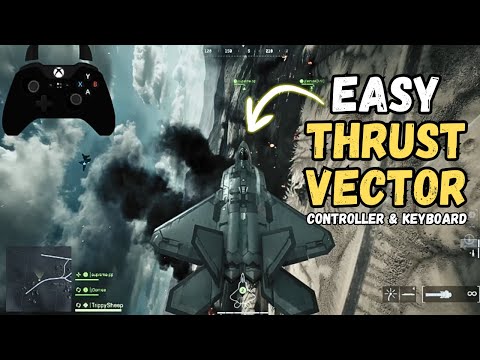
Air dominance in Battlefield 6 requires more than just basic flying skills; it demands complete control over your aircraft's maneuverability. One of the most effective techniques to outmaneuver rival pilots is thrust vectoring. Whether you are playing on a controller or a mouse and keyboard (MnK), understanding how to manipulate these free vectors of flight will elevate your aerial combat from average to elite.

What is Thrust Vectoring in Battlefield 6?

Thrust vectoring is the ability to manipulate the direction of your jet's engine thrust independently of the aircraft's body orientation. In high-stakes dogfights, this allows jets to perform post-stall maneuvers, make impossibly tight turns, and change direction instantly. By utilizing free vectors during engagement, you can throw off enemy target tracking and easily turn the tables on pursuers.

Setting Up Controls for Controller and MnK

Achieving seamless thrust vector maneuvers requires the right keybindings and sensitivity settings for your input device:

  • Mouse & Keyboard (MnK): Bind pitch-up to an easily accessible key (such as Spacebar) to maintain continuous turn rates without constantly resetting your mouse position. Ensure your roll and pitch responsiveness are tuned high enough to snap into new vectors rapidly.
  • Controller: Adjust your stick response curves to linear or dynamic for instant feedback. Minimizing stick deadzones allows for the precise micro-adjustments needed to maintain control during extreme high-G turns.

Key Maneuvers for Air Dominance

To get the most out of thrust vectoring, focus on these tactical maneuvers:

  1. The Post-Stall Turn: Cut your throttle while pitching up aggressively. As the jet bleeds speed, use directional thrust to rotate your nose directly toward the enemy before re-engaging full afterburners.
  2. Evasive Lock-Break: Instead of relying solely on flares, use sharp, unconstrained directional changes. Mastering these free vectors allows you to break missile lock-ons by creating extreme angular velocity changes that tracking systems cannot follow.

With a bit of dedicated practice in private matches or the test range, thrust vectoring will quickly become second nature. Optimize your control setup today and rule the skies in Battlefield 6!

Free vectors

How to Master Dual Akimbo Mode with Free Vectors in Free Fire

If you want to dominate close-quarters combat in Garena Free Fire, nothing packs a punch quite like the Vector SMG in Akimbo mode. Wielding two weapons at once drastically increases your fire rate and overall damage output, allowing you to eliminate opponents in the blink of an eye. Whether you are dropping into Bermuda or Nexterra, learning how to efficiently pick up and utilize free vectors on the battleground is an essential skill for every survivor.

In this quick step-by-step guide, we will walk you through how to activate and master the Dual Vector functionality to elevate your gameplay.

Step 1: Find and Equip Your First Vector

First, land in standard high-tier loot zones across the map and search for a Vector SMG. Once located, pick it up to place it in your primary weapon slot. Finding these powerful free vectors scattered throughout buildings gives you an immediate edge in early-game skirmishes.

Step 2: Acquire a Second Vector

To unlock the Akimbo ability, a single weapon is not enough. You must search for and pick up a second Vector SMG. As soon as both weapons are in your inventory, the game automatically unlocks the dual-wield interface option.

Step 3: Toggle Akimbo Mode

Once both guns are secured, look closely at your HUD (Heads-Up Display). A specialized "Akimbo" icon will appear near your weapon slot or fire buttons. Tap this button to instantly switch from holding a single weapon to dual-wielding both SMGs simultaneously. Your character will now hold a Vector in each hand, ready to unleash double the firepower.

Pro Tips for Dual Vector Combat

  • Stock Up on SMG Ammo: Firing two weapons simultaneously consumes ammunition at double the speed. Always carry extra SMG bullets in your backpack.
  • Keep It Close-Range: Dual vectors excel in tight spaces and close encounters. Avoid engaging enemies at medium or long distances, as spray control and bullet spread drop off quickly.
  • Reload Behind Cover: Reloading two weapons at once takes longer than a standard single-weapon reload. Always fall behind a wall or Gloo Wall before starting your reload sequence.

By following these simple steps, you can easily turn the tide of any close-range battle. Drop into your next match, grab your weapons, and dominate the battleground with lethal dual-wielding action!

Free vectors

Master TradingView Charts: How True Vector and Free Vectors Transform Your Analysis

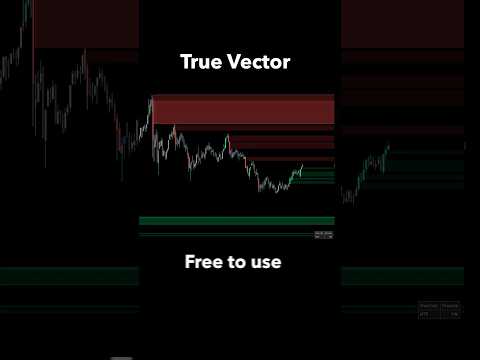
Navigating the financial markets requires tools that provide clear, real-time insights without overwhelming your charts. Whether you are an active day trader or a long-term investor, visual clarity is paramount when reading price action. That is where TradingView’s True Vector comes into play—a powerful, free-to-use indicator designed to help traders frame the market pulse effortlessly.

Framing the Market Pulse with Precision

Understanding market momentum is crucial for making informed trading decisions. True Vector simplifies this process by acting as an intuitive visual guide directly on your TradingView charts. By utilizing clean graphical cues and mathematical precision, this tool allows you to isolate market noise and focus strictly on trend direction and velocity.

When organizing your trading workspace, incorporating high-quality visual aids and free vectors into your charting setup can dramatically streamline your technical analysis. Instead of relying on cluttered indicators, precise vector-based tools dynamically adjust to your chart zoom, providing crisp, readable visual cues regardless of the timeframe you are analyzing.

Why Visual Precision Matters in Technical Analysis

Modern technical analysis relies heavily on clear visual hierarchy. Finding versatile, free vectors and smart indicators on TradingView allows traders to build a professional-grade analysis toolkit without incurring massive software costs.

Here is why adding vector-based tools to your strategy makes a difference:

  • Clarity at Any Zoom Level: Vector visual elements maintain sharp definition whether you are viewing a 1-minute scalping chart or a monthly macro overview.
  • Enhanced Market Focus: By framing key momentum shifts, vector tools keep your attention focused entirely on high-probability trade setups.
  • Cost-Effective System: Utilizing top-tier visual indicators for free ensures you can test, refine, and master your trading system risk-free.

Elevate Your Trading Strategy Today

If you are ready to enhance your chart reading capabilities, incorporating True Vector into your TradingView layout is an excellent place to start. Integrating these free vectors and visual indicators gives you the structural clarity needed to react swiftly to market movements.

Explore the True Vector tool on TradingView today to frame the market pulse with confidence, and discover how smart charting tools can unlock your full trading potential.

Free vectors

How to Master Dual Akimbo Mode with Free Vectors in Free Fire

Unleash Double Firepower in Free Fire

Free Fire is renowned for its fast-paced, high-intensity battle royale gameplay, where close-quarters combat often decides the winner. Among the vast arsenal available, few weapons strike as much fear into opponents as the double Vector. By taking advantage of the Akimbo functionality, players can dual-wield these fast-firing submachine guns to shred enemy armor in seconds. If you want to dominate your matches without spending extra resources, securing free vectors during your looting phases and mastering their dual-wielding setup is an absolute essential.

Step-by-Step: How to Activate Akimbo Mode

Activating the Akimbo mode in Free Fire is straightforward once you know where to look on your screen. Follow this quick guide to start dual-wielding effectively:

  1. Find and Loot Two Weapons: Search high-tier loot zones across the map. Finding two free vectors right off the drop gives you an immediate firepower advantage over nearby opponents.
  2. Equip Both Guns: Open your inventory or grab the weapons from the ground to ensure both primary weapon slots are occupied by a Vector.
  3. Tap the Akimbo Button: Once both weapons are equipped in your active slots, a special dual-weapon icon will appear on your HUD (heads-up display). Tap this button to combine both guns into Akimbo mode, allowing you to fire both simultaneously.

Tips for Dominating Close-Range Fights

While dual Vectors deliver unmatched damage output at close range, they come with unique mechanics that require strategy:

  • Stock Up on SMG Ammo: Firing two guns at the same time drains your ammunition twice as fast. Always keep extra SMG ammo in your backpack.
  • Master Hip-Firing: In Akimbo mode, you cannot aim down sights (ADS). Practice controlling your recoil while hip-firing to maintain precision during movement.
  • Close the Distance: The Vector's effectiveness drops significantly at medium to long distances. Use gloo walls or high-mobility characters to close the gap before engaging.

By looting these free vectors on the battleground and activating Akimbo mode properly, you can easily turn the tide of close-range combat and claim your next Booyah!

Free vectors

Understanding Types of Vectors: A Guide to Free Vectors and Beyond

Vectors play a fundamental role in higher-level mathematics and physics. Whether you are preparing for Class 12 Maths board exams or diving into competitive test preparation, mastering vector algebra starts with understanding how different vectors behave. Before performing complex calculations like scalar or vector products, you must first familiarize yourself with the primary types of vectors.

What Are Free Vectors?

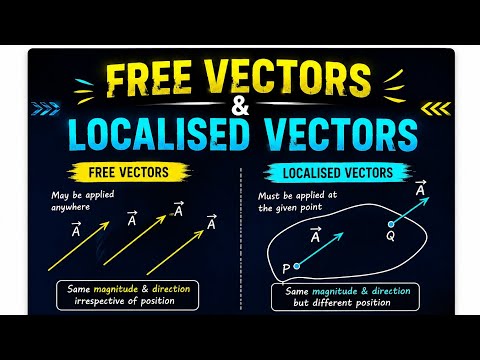
In vector algebra, not all vectors are anchored to a fixed starting point. Most concepts in high school mathematics deal with free vectors. A free vector is defined purely by its magnitude and direction, independent of its initial position in a coordinate system.

Because location does not restrict free vectors, you can translate them parallel to themselves anywhere in space without altering their properties or value. This flexibility makes it much easier to perform operations like vector addition and subtraction visually and algebraically.

Essential Types of Vectors Explained

Beyond initial positioning, vectors are categorized by their specific magnitudes, directions, and relationships to one another. Here are the core types every student should recognize:

  • Zero (Null) Vector: A vector whose magnitude is zero and whose initial and terminal points coincide. It has no specified direction and is represented as $\vec{0}$.
  • Unit Vector: A vector that has a magnitude of exactly 1 unit. Unit vectors are used primarily to indicate direction and are denoted with a caret symbol, such as $\hat{a}$.
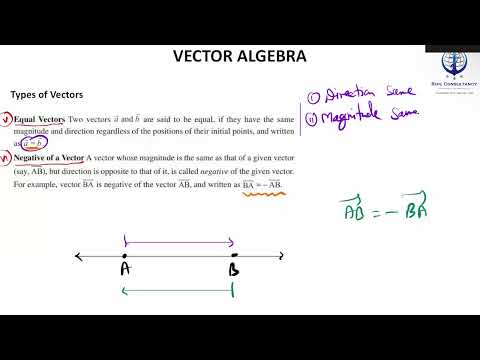
  • Equal Vectors: Two vectors are considered equal if they possess the exact same magnitude and point in the same direction, regardless of their initial positions.
  • Parallel Vectors: Vectors that share the same line of action or run parallel to one another. They can be classified as like vectors (same direction) or unlike vectors (opposite directions).

Why Vector Classification Matters

Differentiating between these categories prevents common algebraic mistakes in 3D geometry and physics problems. By mastering how free vectors interact with unit and zero vectors, you build a solid foundation for solving complex spatial equations with confidence. Keep practicing these core definitions, and vector algebra will quickly become one of your strongest mathematical topics.

Free vectors

Vecteezy Review: Is It Still the Ultimate Source for Free Vectors?

Finding high-quality graphic design resources without breaking the bank can be a challenge. Whether you are a freelance designer, a content creator, or a digital marketer, having access to reliable, scalable graphics is essential for producing eye-catching content. Enter Vecteezy—one of the most popular platforms offering free vectors, illustrations, and stock assets. But does it live up to the hype? Let’s dive into an honest review of what Vecteezy brings to the table.

A Massive Library of Creative Assets

Vecteezy has built a solid reputation over the years as a go-to repository for creative professionals. The platform hosts millions of assets, ranging from minimalist icons and complex background patterns to fully editable character illustrations. One of its standout features is how easy it is to search for high-resolution graphics tailored to specific project needs.

For creators on a budget, the platform’s extensive selection of free vectors is a total game-changer. These files come in standard editable formats like SVG, AI, and EPS, allowing you to easily customize colors, shapes, and scale in your preferred vector editing software without any loss of quality.

User-Friendly Features and In-Browser Editing

Unlike many traditional stock websites, Vecteezy goes a step further by offering an integrated in-browser editor. This tool allows users to tweak colors, rotate elements, and add text directly on the site before downloading. It is a fantastic feature for quick edits when you do not want to launch heavy design software just to make minor adjustments.

Additionally, the search and filter options are remarkably intuitive. You can filter results by license type, orientation, and file format, ensuring you find precisely what you need in seconds.

Licensing: What You Need to Know

While Vecteezy provides millions of free vectors, it is important to understand the licensing terms. Free downloads typically require attribution, meaning you must credit Vecteezy or the original artist when using the graphics in commercial or public projects. If you prefer to skip attribution and unlock exclusive content, Vecteezy Pro offers an affordable subscription tier with unlimited downloads and extended commercial licenses.

The Verdict

Overall, Vecteezy remains one of the top platforms for designers looking for versatile visual elements. With its vast asset library, intuitive interface, and helpful editing tools, it is an indispensable resource for taking your creative projects to the next level.

Free vectors

How to Master the Double Vector in Free Fire: Level 99 Tips and Free Vectors of Strategy

In the high-octane world of Free Fire, choosing the right weapon can mean the difference between a "Booyah" and a quick trip back to the lobby. Among the vast arsenal available to players, the Double Vector stands out as a dominant force in close-quarters combat. If you are aiming to reach Level 99 and beyond, mastering this akimbo beast is non-negotiable.

Why the Double Vector is a Game-Changer

The Vector was the first weapon in Free Fire to introduce the "Akimbo" mode, allowing players to wield two guns simultaneously. This doubling of firepower results in an incredibly high rate of fire that can shred through enemy armor in seconds. While many players look for Free vectors of attack to surprise their opponents, few weapons offer the raw aggressive potential that the Double Vector provides.

Master the Akimbo Style

To unlock the full potential of this weapon, you must understand its range limitations. The Double Vector is designed for extreme close-range encounters. When you are rushing a building or engaging in a tight urban skirmish, the spray of bullets ensures that your target has nowhere to hide. However, the accuracy drops significantly at mid-range, so movement is key.

Learning how to close the distance between you and your enemy is one of the best Free vectors for improvement that any player can utilize. Use gloo walls and smoke grenades to mask your approach, ensuring you get close enough to let the Double Vector do its work.

Pro Tips for Level 99 Gameplay

  1. Manage Your Reloads: The Double Vector burns through ammunition rapidly. Always ensure you have a safe pocket of time to reload, or pair it with a character like Jai to automatically regain ammo after a knockdown.
  2. Optimize Your Character Skill Combo: Characters like Jota, who recovers HP after a kill, or Hayato, who increases armor penetration, synergize perfectly with the aggressive playstyle required for the Vector.
  3. Control the Recoil: While the Double Vector is powerful, the recoil can be jumpy. Practice short, controlled bursts if the enemy is slightly further away to maintain maximum impact.

Conclusion

The journey to becoming a Level 99 pro requires a mix of strategy, timing, and the right equipment. By mastering the Double Vector, you equip yourself with the best tool for aggressive play. Remember, success in Free Fire isn't just about fast fingers; it's about finding the right Free vectors of strategy that allow you to outsmart and outgun your competition.

Equip your Double Vector today and start dominating the battlefield!

Free vectors

A Complete Guide to Types of Vectors: Understanding Free Vectors, Unit Vectors, and More

Vector algebra is one of the most fundamental topics in secondary mathematics and physics. Before diving into complex operations such as dot products, cross products, and 3D geometry, it is essential to understand how different vectors behave and how they are classified. From magnitude to spatial orientation, vectors come in various types, each serving a unique purpose in problem-solving.

Key Types of Vectors Explained

To master vector mathematics, you must first become familiar with the basic categories you will encounter in your studies:

  • Zero (Null) Vector: A vector whose magnitude is zero and whose initial and terminal points coincide. It carries no specific direction.
  • Unit Vector: A vector that has a magnitude of exactly one unit. Unit vectors are primarily used to specify a direction in two-dimensional or three-dimensional space.
  • Equal Vectors: Two vectors are considered equal if they possess the exact same magnitude and direction, regardless of where they start in space.
  • Parallel (Collinear) Vectors: Vectors that lie along the same straight line or parallel lines, irrespective of their magnitudes.

Understanding Free Vectors in Mathematics

When working with vector algebra, you will frequently encounter the concept of free vectors. In mathematics and physics, free vectors are defined as vectors whose initial position is not restricted to a fixed point. As long as you maintain the vector's magnitude and direction, you can freely translate it anywhere in space parallel to its original line of action.

Recognizing free vectors simplifies geometric constructions and algebraic operations. It allows students to relocate vectors to form triangles or parallelograms when performing vector addition or subtraction without changing their fundamental values.

Why Mastering Vector Types Matters

Not all vectors behave the same way, and recognizing their distinct properties is critical before moving on to advanced mathematical applications. By establishing a solid foundation in identifying unit, zero, equal, parallel, and free vectors, you will build the confidence needed to solve complex Class 12 Maths problems efficiently.

Free vectors

Unlock Trading Insights: How Free Vectors on TradingView Help Frame the Market

Navigating the financial markets requires accurate visual data and reliable technical indicators. For traders who rely on price action analysis, finding tools that provide clear, actionable insights without expensive subscription fees is crucial. Whether you are a beginner or a seasoned trader, utilizing free vectors like the True Vector indicator on TradingView can significantly improve your charting accuracy and market awareness.

Frame the Market Pulse with Precision

Understanding market momentum is all about seeing the overall direction clearly. The True Vector tool on TradingView is specifically designed to help traders frame the market pulse effortlessly. Instead of getting lost in overwhelming chart patterns or lagging indicators, vector-based visual analysis gives you a clean representation of price trajectory and directional strength.

By incorporating free vectors into your daily charting routine, you can easily filter out market noise and focus on high-probability setups. This visual clarity allows you to identify critical key levels, spot momentum shifts early, and align your entries with dominant market movements.

Upgrade Your Analytical Workflow

While individual tools like True Vector offer immense value on their own, pairing them with a cohesive suite of trading resources can take your market analysis to the next level. Traders looking for a complete edge often explore broader analytical toolsets, such as the Smart Suite Bundle, to complement their core vector indicators.

Combining directional vector signals with smart market filters gives you a multi-dimensional view of price behavior across forex, stocks, or cryptocurrencies. Starting with accessible, high-performance indicators on TradingView ensures you build a solid, cost-effective foundation for your trading strategy.

Final Thoughts

Mastering the charts does not require overcomplicating your trading desk. By leveraging powerful, accessible tools on TradingView, you can streamline your technical analysis and stay ahead of key market shifts. Search for the True Vector tool on TradingView today and start reading the market pulse with total clarity!

Free vectors

Master the Deadliest Double Vector Combo: Why These Free Vectors are Game-Changers

In the fast-paced world of mobile battle royales, few things strike fear into the hearts of opponents like the rapid-fire sound of dual SMGs. I recently put one of the most notorious loadouts to the ultimate test: the "Deadliest Double Vector Combo." If you have been looking for a way to dominate your close-quarter engagements and rack up more wins, understanding the mechanics of these free vectors in your arsenal is the first step toward victory.

The Power of the Double Vector

The Double Vector isn’t just a weapon choice; it’s a statement. When you enter "Akimbo" mode, you effectively double your fire rate, creating a wall of lead that few players can survive. During my testing phase, I found that this combo melts through Level 3 vests in a matter of seconds. The sheer DPS (Damage Per Second) is unmatched in building-to-building combat. While many players spend their time searching for premium skins, the raw power of the standard free vectors you find on the map is more than enough to wipe a full squad if handled correctly.

Tactical Mastery: How to Close the Gap

To truly master this deadly combo, you have to change your playstyle. The Vector suffers from significant damage drop-off at long range, meaning you need to be a master of movement. I recommend using "Gloo Walls" or speed-boosting character abilities to close the distance between you and your target.

Once you are within five to ten meters, the Double Vector becomes a delete button. In my gameplay sessions, I noticed that the most successful players are those who don't hesitate. When you locate these free vectors during your initial loot phase, make sure you prioritize high-capacity magazines, as the high fire rate means you will go through ammunition incredibly fast.

The Final Verdict: Is it Broken?

After testing the combo in various ranked scenarios, the result is clear: the Double Vector remains the king of close-range combat. It rewards aggressive players who aren't afraid to get into the thick of the action. Whether you are a seasoned pro or a casual player, mastering the recoil and movement of this dual-wield setup will significantly boost your K/D ratio.

Stop playing defensively and start taking control of the map. With the right strategy, the deadliest weapon in the game is already waiting for you in your next match.

Free vectors

Types of Vectors Explained: From Free Vectors to Unit and Equal Vectors

Vector algebra is a foundational concept in mathematics and physics, essential for understanding everything from physical forces and velocity to 3D computer graphics. However, not all vectors behave in the same way. To master vector operations, you must first understand the fundamental types of vectors and how their properties differ.

What Are Free Vectors?

In linear algebra and physics, free vectors play a crucial role. A free vector is defined entirely by its magnitude and direction, completely independent of its initial point or position in space. This means you can shift free vectors parallel to themselves anywhere in a coordinate system without altering their mathematical value. Because their starting point does not restrict them, they are widely used when analyzing forces, displacements, and standard vector addition.

Key Types of Vectors You Need to Know

Beyond free vectors, several specific vector types form the backbone of high school and college-level mathematics:

  • Zero (or Null) Vector: A vector whose magnitude is zero and whose direction is arbitrary or undefined. It is represented as $\vec{0}$ and serves as the additive identity in vector algebra.
  • Unit Vector: A vector that has a magnitude of exactly one unit. Unit vectors are primarily used to specify a direction in space without changing the magnitude of the quantity they multiply.
  • Equal Vectors: Two or more vectors are considered equal if they share both the exact same magnitude and direction, regardless of where their initial points are located.
  • Parallel and Collinear Vectors: Vectors that act along the same line or parallel lines. Parallel vectors can point in the same direction (like vectors) or opposite directions (unlike vectors).

Why Mastering Vector Types Matters

Before attempting complex calculations like scalar (dot) products, vector (cross) products, or 3D geometry problems, grasping these distinct vector types is essential. Recognizing whether you are working with unit vectors, zero vectors, or parallel vectors ensures precision and confidence when solving advanced math problems.

Free vectors

Mastering dMAT 2026 Lesson 5: A Complete Guide to Vectors and Free Vectors Formulas

Welcome back to the dMAT Preparation Hub! As we move forward in our journey toward the dMAT 2026 entrance exam, we have officially reached a pivotal milestone. In Lesson 5, we transition into the highly anticipated Subject Module, starting with one of the most fundamental topics in physics and mathematics: Vectors.

Understanding the Foundation of Vectors

A vector is a quantity that possesses both magnitude and direction. In the context of competitive exams like the dMAT, understanding the behavior of these quantities is crucial. One of the first concepts students encounter is the distinction between bound vectors and free vectors. In linear algebra, free vectors are those that are characterized solely by their magnitude and direction, meaning they can be shifted anywhere in space without changing their mathematical value. Mastering the properties of these vectors allows you to simplify complex geometric problems into manageable algebraic equations.

Key Formulas and Calculations

To excel in the dMAT Subject Module, you must be comfortable with the core formulas. Lesson 5 breaks down the essential operations you will need to perform under exam pressure, including:

  • Vector Addition and Subtraction: Using the parallelogram and triangle laws.
  • Scalar Multiplication: Changing the magnitude of a vector without altering its orientation.
  • The Dot Product: Calculating the angle between two vectors and determining orthogonality.
  • Magnitude Calculation: Finding the "length" of a vector using the Pythagorean theorem in three-dimensional space.

By internalizing these formulas, you transform abstract concepts into tools that can be used to solve even the most challenging dMAT practice questions.

Why This Lesson Matters for dMAT 2026

The dMAT is designed to test your analytical thinking and your ability to apply mathematical theory to practical scenarios. Vectors form the language of the physical world; they are the building blocks for mechanics, electromagnetism, and advanced geometry.

As you go through your study sessions, remember that consistency is key. We recommend taking the time to draw out each problem visually. Whether you are calculating the displacement of an object or analyzing the force acting upon a point, visualizing these free vectors in a coordinate system will help prevent common calculation errors.

Conclusion and Next Steps

Lesson 5 is just the beginning of our deep dive into the dMAT Subject Module. By the end of this guide, you should feel confident in your ability to identify, manipulate, and calculate vector-based problems. Be sure to download our practice worksheets and follow along with the video to ensure you are fully prepared for the dMAT 2026. Stay focused, keep practicing, and let’s master these mathematical foundations together!

Free vectors

Master Affinity Vector: A Complete Guide to Designing Free Vectors

Vector graphic design has become an essential skill for modern creators, digital marketers, and brand identity designers. Whether you want to design sharp logos, eye-catching labels, or high-quality digital assets, working with scalable graphics is crucial. While many creators constantly search for pre-made assets, learning how to design your own free vectors using powerful software like Affinity Vector can completely transform your creative workflow.

Why Choose Affinity Vector for Graphic Design?

Affinity has established itself as an industry-leading suite of creative software. Known for its versatile 3-in-1 approach, the software combines speed, precision, and efficiency. The Vector Studio within Affinity provides a comprehensive set of tools specifically built for crafting sharp, infinite-resolution artwork without losing quality.

From essential shape tools and pen paths to advanced typography and color gradients, Affinity Vector gives you full creative freedom. It is an ideal solution for both beginners looking to understand the fundamentals of node manipulation and experienced designers who want a streamlined, robust workspace.

From Basics to Advanced: Master the Tools

Mastering vector design doesn't have to be overwhelming. A structured step-by-step approach can take you from an absolute beginner to an advanced creator in a short amount of time.

Key concepts covered in complete vector design training include: - Core Tools & Navigation: Understanding the canvas, nodes, pen tool, and shape builders. - Brand Identity Design: Crafting sleek logos, custom typography, and scalable icons. - Packaging & Print: Designing professional product labels, stickers, and marketing materials. - Custom Asset Creation: Instead of searching through stock websites to download generic free vectors, you gain the skills to build unique, royalty-free assets tailored precisely to your brand.

Start Creating Professional Vector Art Today

Relying on overused graphics found online can limit your brand's visual appeal. Learning how to navigate vector tools unlocks unlimited possibilities for your creative projects. By dedicating time to learn the software from A to Z—from basic geometry to advanced illustration techniques—you can produce stunning visuals independently.

Stop searching endlessly for basic free vectors online. Take control of your design workflow, master Affinity Vector, and start creating professional-grade graphics today!

Free vectors

Master the Basics: Exploring Unit, Equal, and Free Vectors in Class 12 Maths

In the study of physics and advanced mathematics, vectors are more than just lines with arrows; they are the fundamental building blocks for understanding force, velocity, and spatial geometry. For Class 12 students, mastering vector algebra begins with a clear understanding of the different types of vectors. While they may look similar on paper, their mathematical properties vary significantly.

Understanding the Concept of Free Vectors

Before diving into specific types, it is crucial to understand the context in which we study them. In most standard mathematical problems, we deal with free vectors. These are vectors whose initial point is not restricted to a specific location in space. As long as the magnitude and direction remain unchanged, the vector can be moved parallel to itself. This flexibility of free vectors is what allows us to perform operations like addition and subtraction using the triangle or parallelogram laws easily.

The Essentials: Unit and Zero Vectors

Two of the most common types you will encounter are the Unit Vector and the Zero Vector.

  • Unit Vector: As the name suggests, a unit vector has a magnitude of exactly one. Its primary purpose is to indicate direction. In coordinate geometry, these are often represented by the symbols i, j, and k.
  • Zero Vector: Also known as a null vector, this has a magnitude of zero. Because it has no length, its direction is indeterminate. It acts as the identity element in vector addition.

Equal vs. Parallel Vectors

Distinguishing between equal and parallel vectors is a common area of confusion for students.

  1. Equal Vectors: Two vectors are considered equal only if they have the same magnitude and the same direction, regardless of their starting positions. Since we often work with free vectors in Class 12 Maths, two vectors are equal if they are parallel, point the same way, and are of the same length.
  2. Parallel (Collinear) Vectors: These vectors act along the same line or parallel lines. They can point in the same direction (like vectors) or opposite directions (unlike vectors). Their magnitudes do not have to be equal.

Why Classification Matters

Understanding these classifications is an essential prerequisite before moving on to complex vector operations, such as dot products and cross products. By recognizing whether you are working with a unit vector or a parallel vector, you can apply the correct algebraic rules and solve geometric problems with much higher accuracy.

Mastering these definitions is the first step toward excelling in your Class 12 board exams and competitive entrance tests. Keep practicing the visualization of these vectors to build a strong foundation in linear algebra!

Free vectors

Free Fire Double Vector Guide: Dominate Close-Quarters Combat with Free Vectors of Attack

Why the Double Vector Rules Close-Range Combat

The Vector SMG in Free Fire is legendary for its absurdly fast rate of fire. When dual-wielded as the Double Vector, it becomes an unstoppable close-range powerhouse capable of wiping out an entire squad in seconds. By aggressively rushing your opponents, you force them into high-pressure situations where panic sets in, making their aim shaky while you easily secure the elimination.

Strategic Movement: Utilizing Free Vectors to Flank Enemies

Executing a successful rush with the Double Vector requires more than just holding down the sprint button. To close the distance without taking heavy damage, smart players must manipulate the battlefield by utilizing free vectors of movement. Instead of running in a predictable straight line, take advantage of open angles, unexpected flank paths, and rapid cover hops to approach your target safely.

When you master these free vectors of attack, opponents lose track of your exact position. The moment you break into their immediate space with dual SMGs blazing, you leave them completely overwhelmed with zero time to react.

Essential Tips for Mastering the Rush Playstyle

To maximize your success when playing aggressively with the Double Vector, keep these key tactics in mind:

  • Close the Gap Quickly: The Double Vector excels in point-blank range but suffers heavily at medium to long distances. Always shorten the distance before opening fire.
  • Use Gloo Walls Tactically: Place Gloo Walls rhythmically as you advance to create free vectors of safe movement across open areas.
  • Equip Speed and Damage Skills: Pair your loadout with character abilities like Kelly for movement speed or Hayato for enhanced armor penetration to maximize your rush potential.

Final Thoughts

Dominating Free Fire with the Double Vector comes down to confidence, positioning, and aggressive execution. By controlling engagement angles and keeping the pressure on your enemies, you can easily turn every close-quarters fight into an effortless win!

Free vectors

Mastering Vector Algebra: A Guide to Free Vectors, Unit Vectors, and More

Vectors are fundamental mathematical tools used across physics, engineering, and advanced mathematics to represent quantities that possess both magnitude and direction. However, not all vectors behave in the exact same way. Before diving into complex vector operations, dot products, or cross products, it is essential to build a solid foundation by understanding the different types of vectors.

What Are Free Vectors?

In vector algebra, one of the most flexible concepts you will encounter is that of free vectors. A free vector is defined as a vector whose initial point is not restricted to a fixed position in space. As long as its magnitude and direction remain unchanged, it can be moved parallel to itself anywhere within a coordinate system.

Understanding how free vectors function makes solving geometric problems significantly easier. Because their starting points can be shifted freely, mathematicians and physicists can manipulate these vectors to form triangles, parallelograms, and polygon law diagrams without altering their core mathematical properties.

Common Types of Vectors Explained

Beyond free vectors, vector algebra classifies vectors into several distinct types based on their magnitude, direction, and initial positions:

  • Zero Vector (Null Vector): A vector whose magnitude is zero and whose initial and terminal points coincide. Since its length is zero, its direction cannot be specified and is considered arbitrary.
  • Unit Vector: A vector that has a magnitude of exactly one unit. Unit vectors are primarily used to indicate a specific direction in space without affecting the magnitude of other quantities.
  • Equal Vectors: Two vectors are defined as equal if they have the exact same magnitude and point in the same direction, regardless of their initial starting positions.
  • Parallel Vectors: Vectors that act along parallel lines or the same straight line. They share the same orientation, though their magnitudes and specific directions (same vs. opposite) may vary.

Why Understanding Vector Types Matters

Grasping these definitions is not just about memorization—it is a critical step for Class 12 Mathematics and introductory physics. Whether you are adding forces in mechanics or computing spatial positions in 3D geometry, recognizing whether you are working with unit vectors, zero vectors, or parallel vectors ensures accurate calculations and logical problem-solving.

Free vectors